Boehringer Ingelheim’s Rube Goldberg-Inspired Display
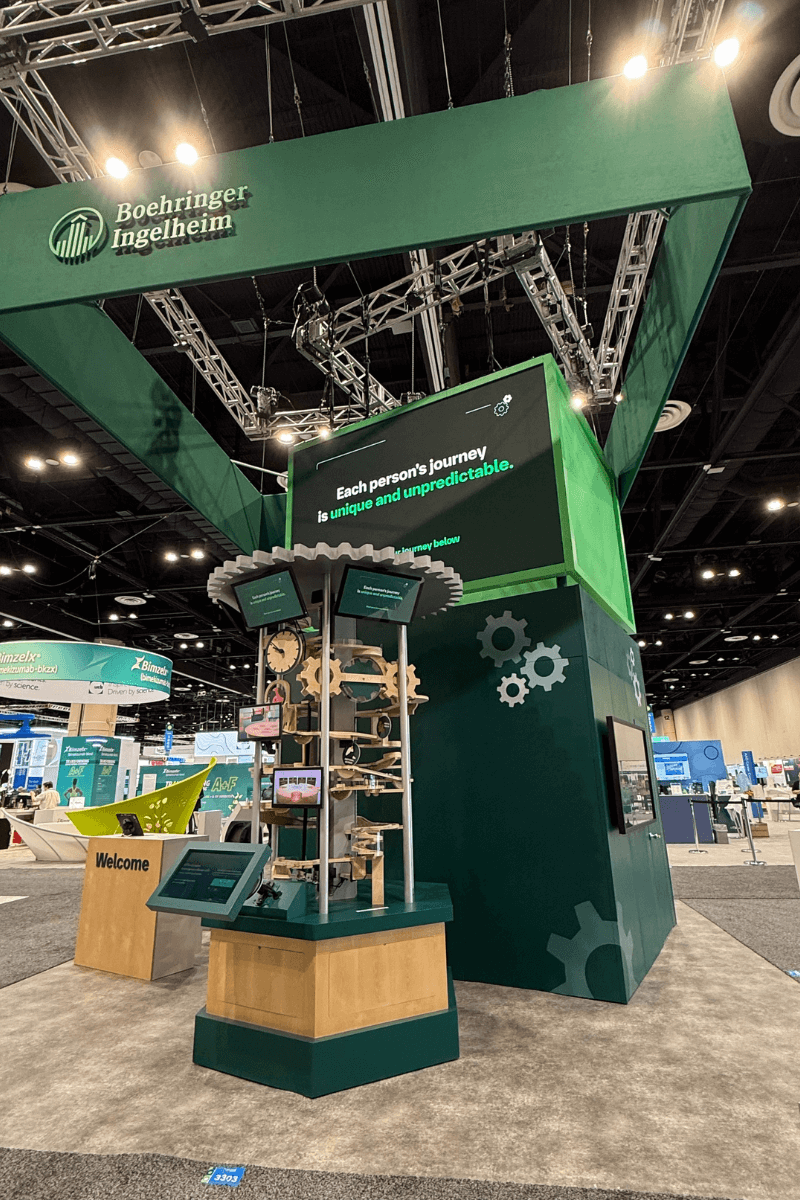
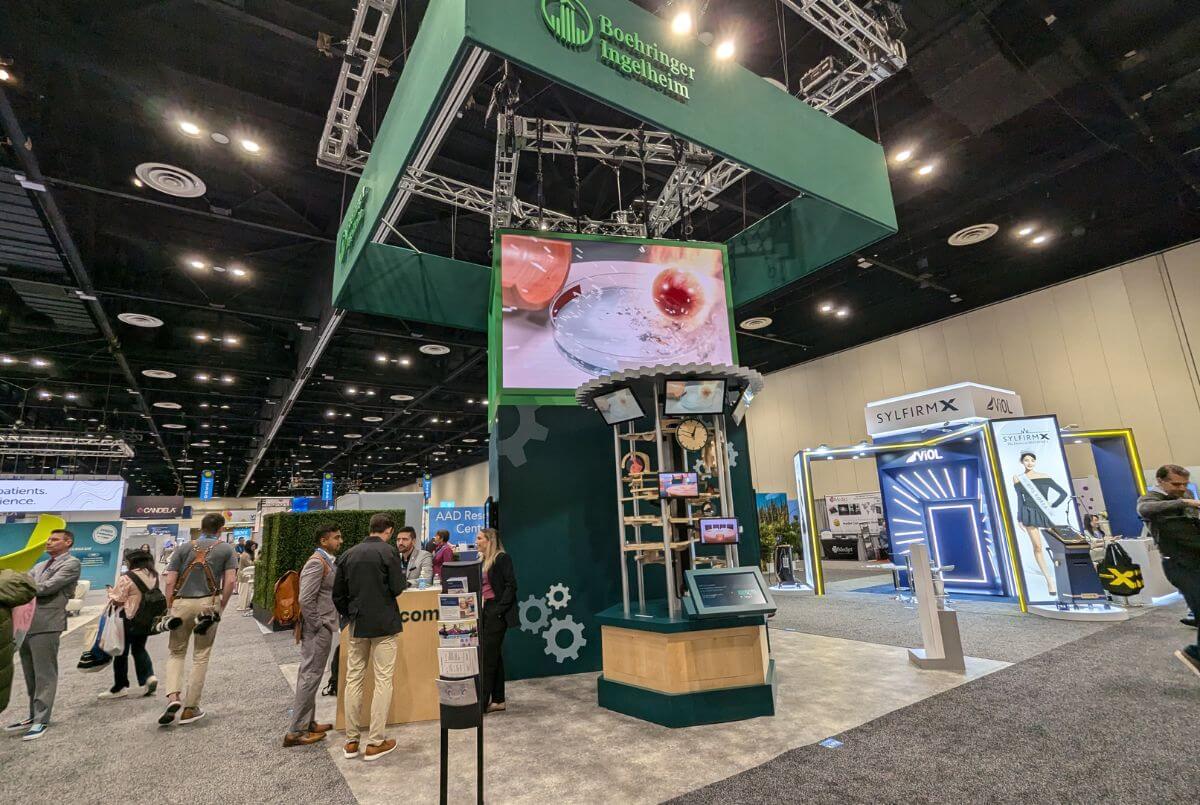
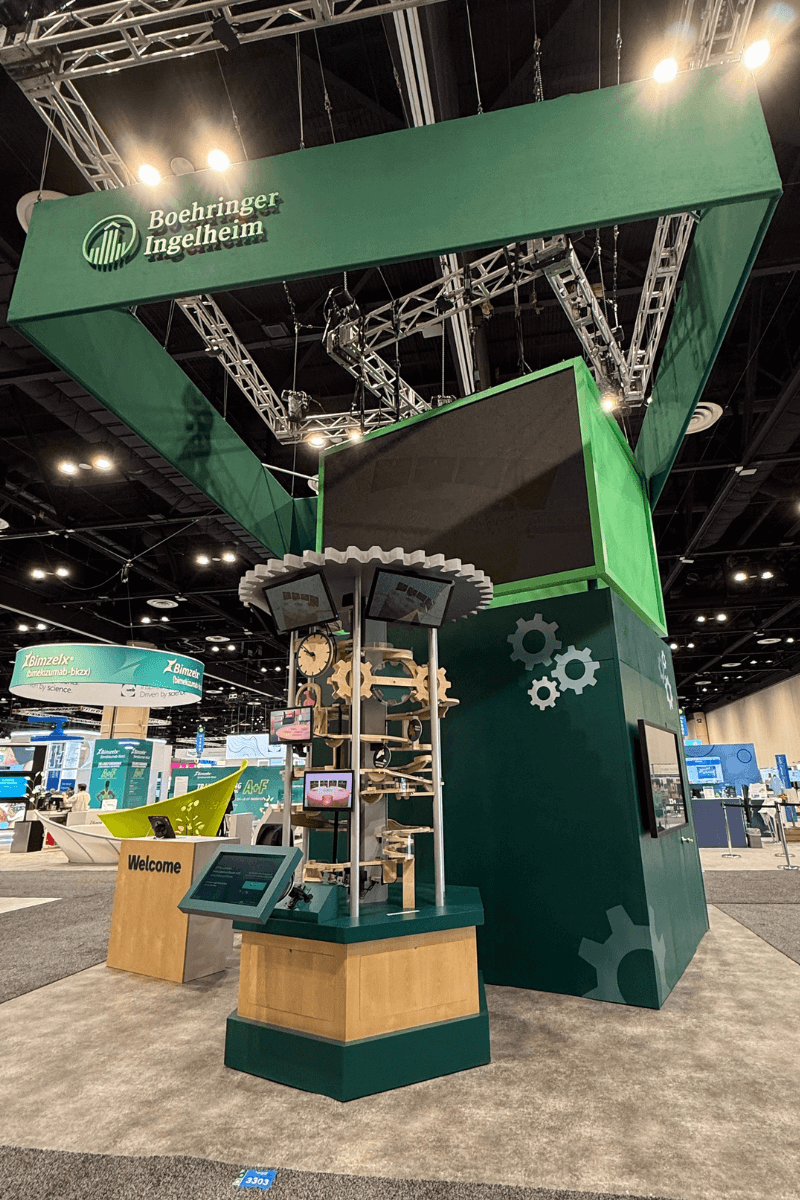
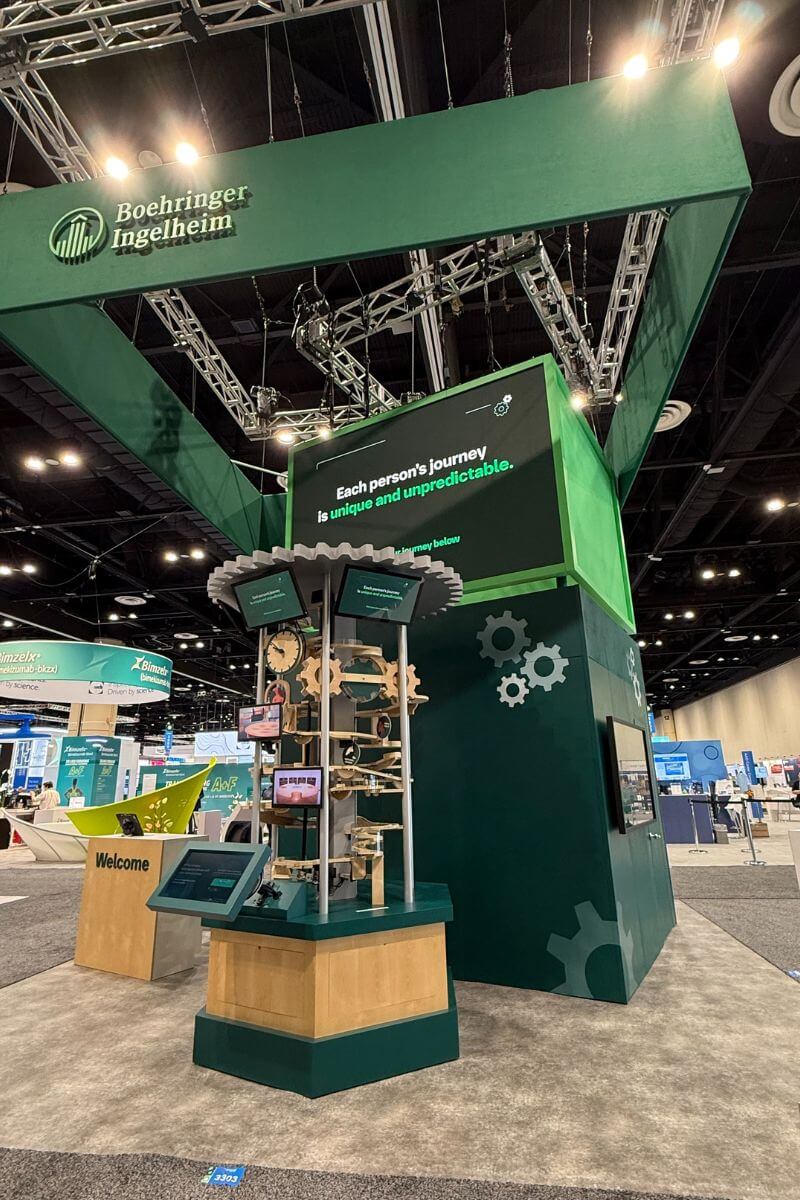
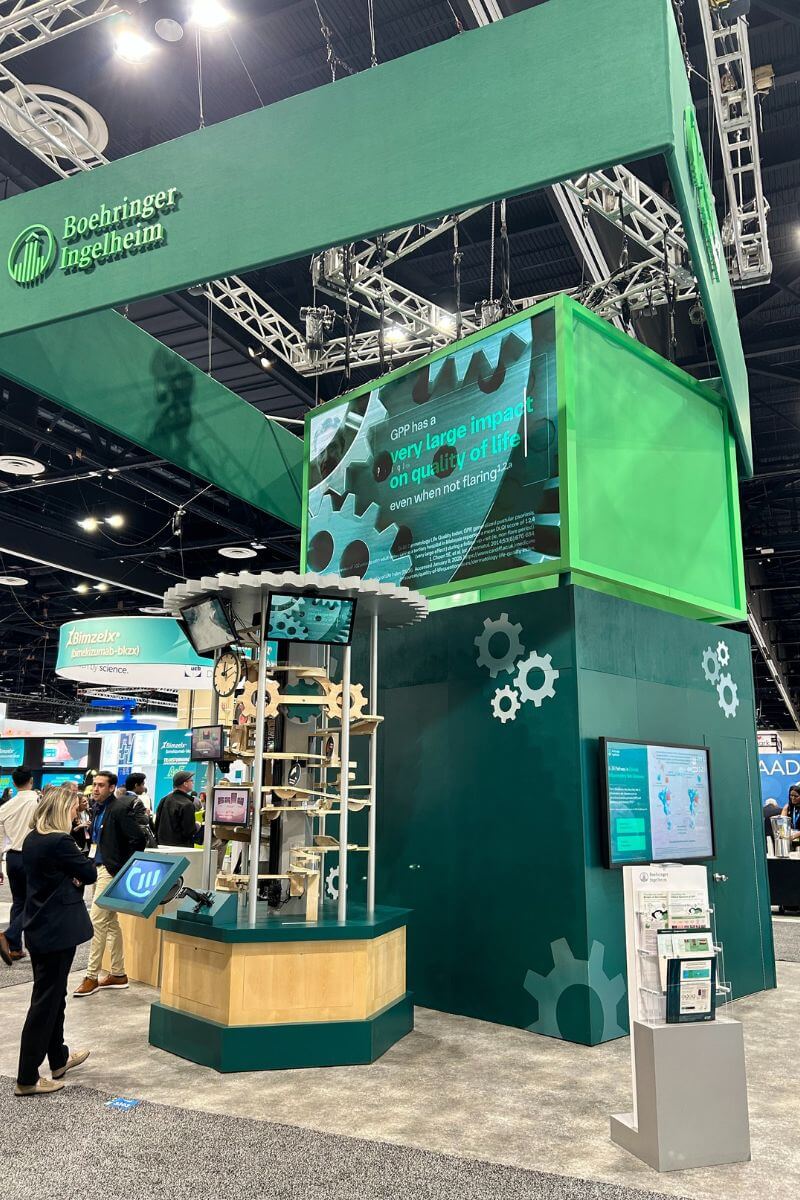
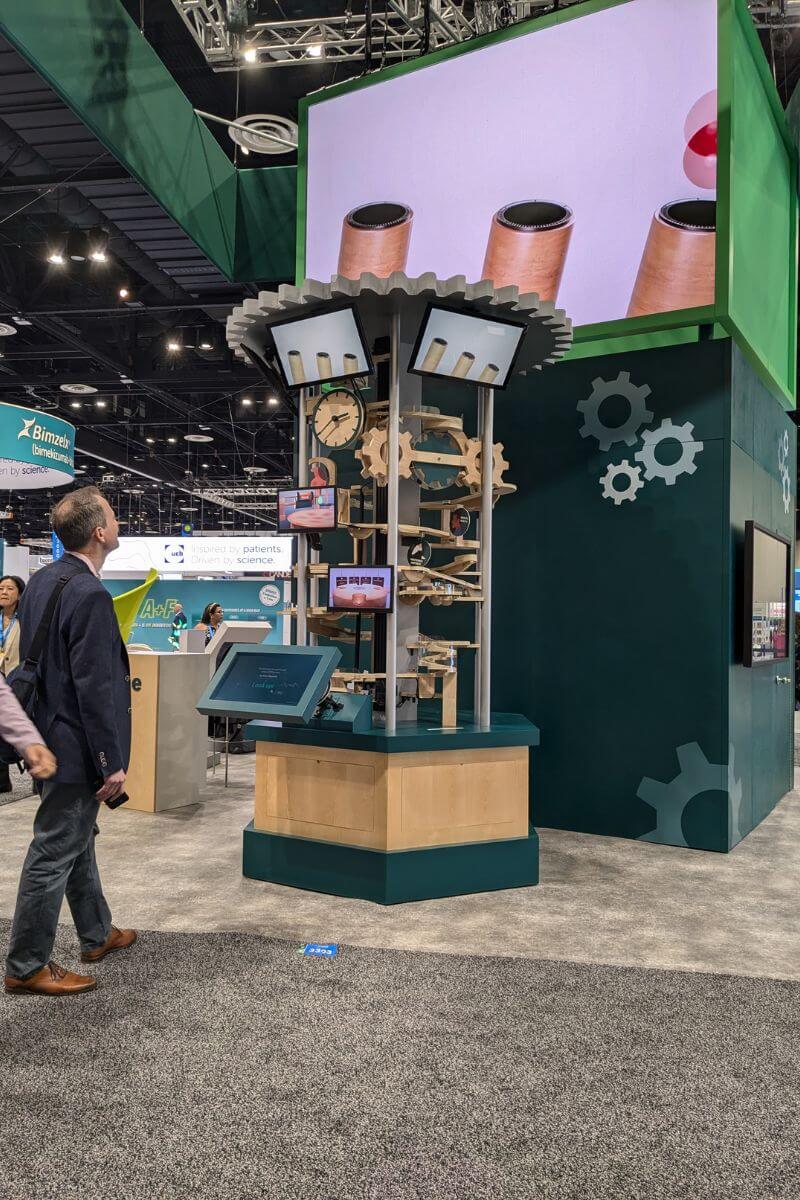
A Rube Goldberg-inspired disease state exhibit? A category that’s ruled by 10 x 10s with pipeline graphics? What could we do in a 20 x 20 disease state exhibit that would showcase the Boehringer Ingelheim science and engage the dermatologists?
When Boehringer Ingelheim went to the annual meeting of The American Academy of Dermatologists (AAD), the company had pipeline data on skin diseases that it wanted to share with the dermatologists. Wouldn’t it be great if we could present the data in an interactive display?
Although the “C” in Access TCA doesn’t stand for collaboration, this project showed Access’s design and production capabilities as well as how we partner with agencies to create something amazing. Working with the agency Nucleus and a team of Access specialists, we started to develop a loose storyboard. Wondering out loud, someone said, “You know, we could do a Rube Goldberg machine.”
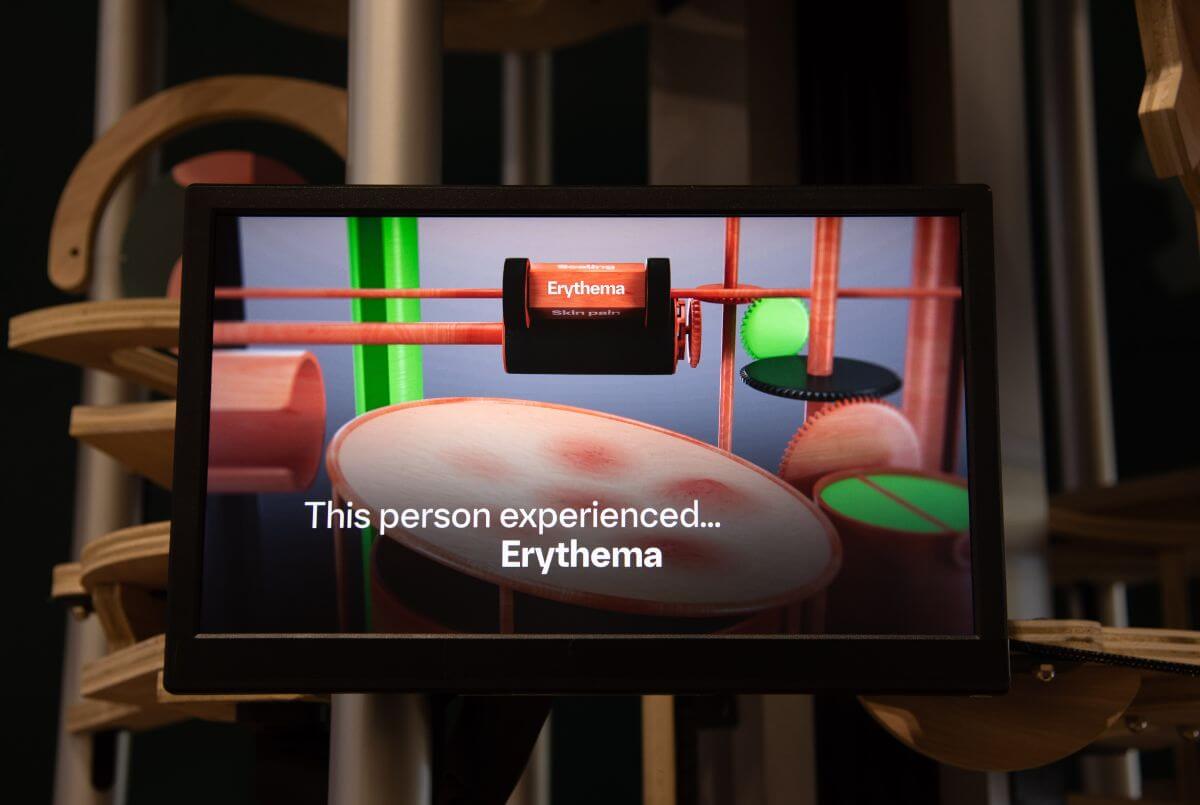
With a few brief sketches and a lot of the heavy lifting, our experiential designer came up with the initial layouts of how the machine could work. Fortunately, he has some quirky mechanism-type stuff in his playbook, so he worked with our contact at the agency, an AV whiz. The agency team was building digital assets at the same time as we were developing the exhibit, so the goal was to coordinate animated sequences that they were building for digital with the machine mechanism. That meant coordinating the animations so what happens on the screen directly correlates with what’s happening in the machine in real life.
The Experience
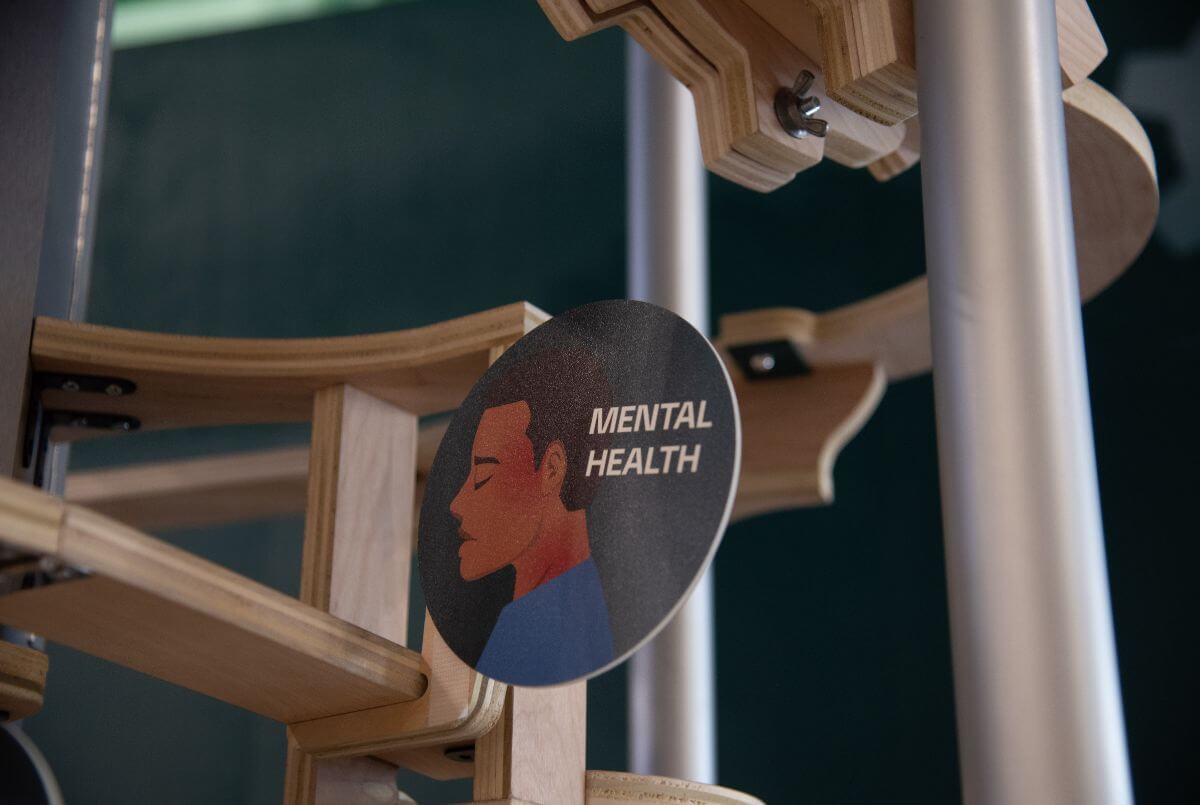
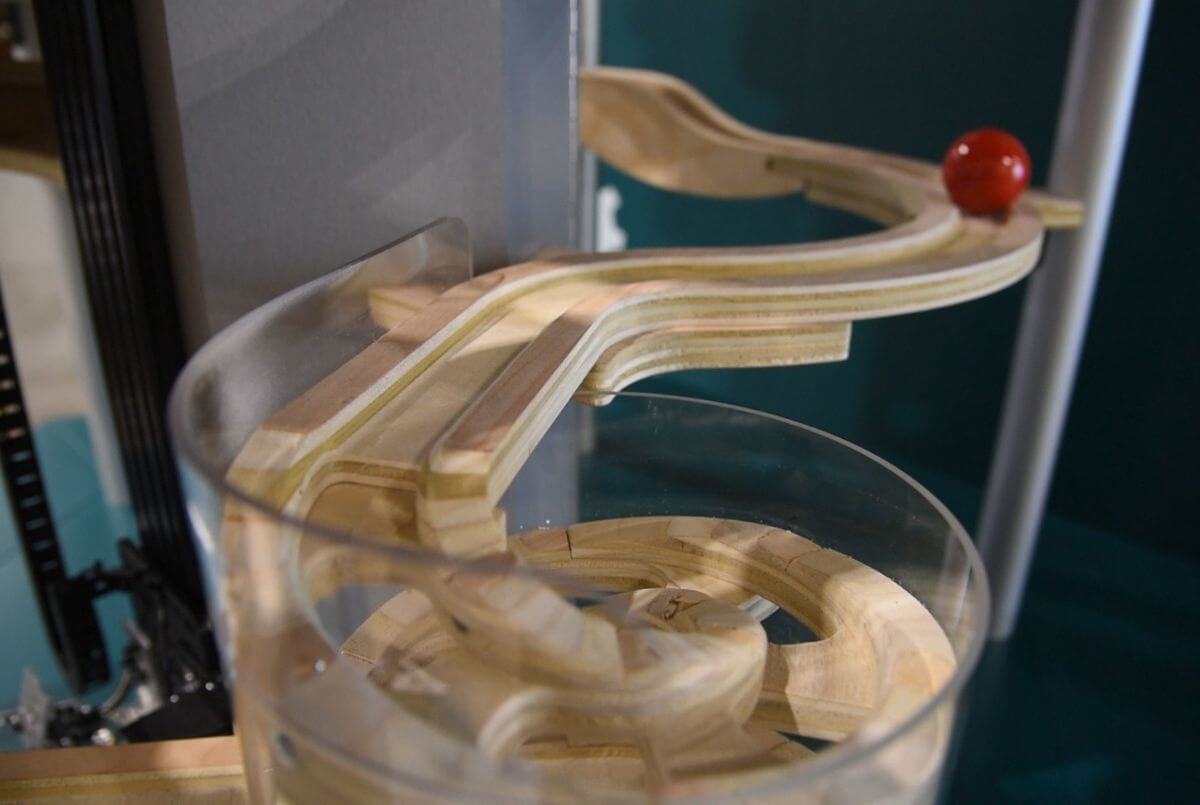
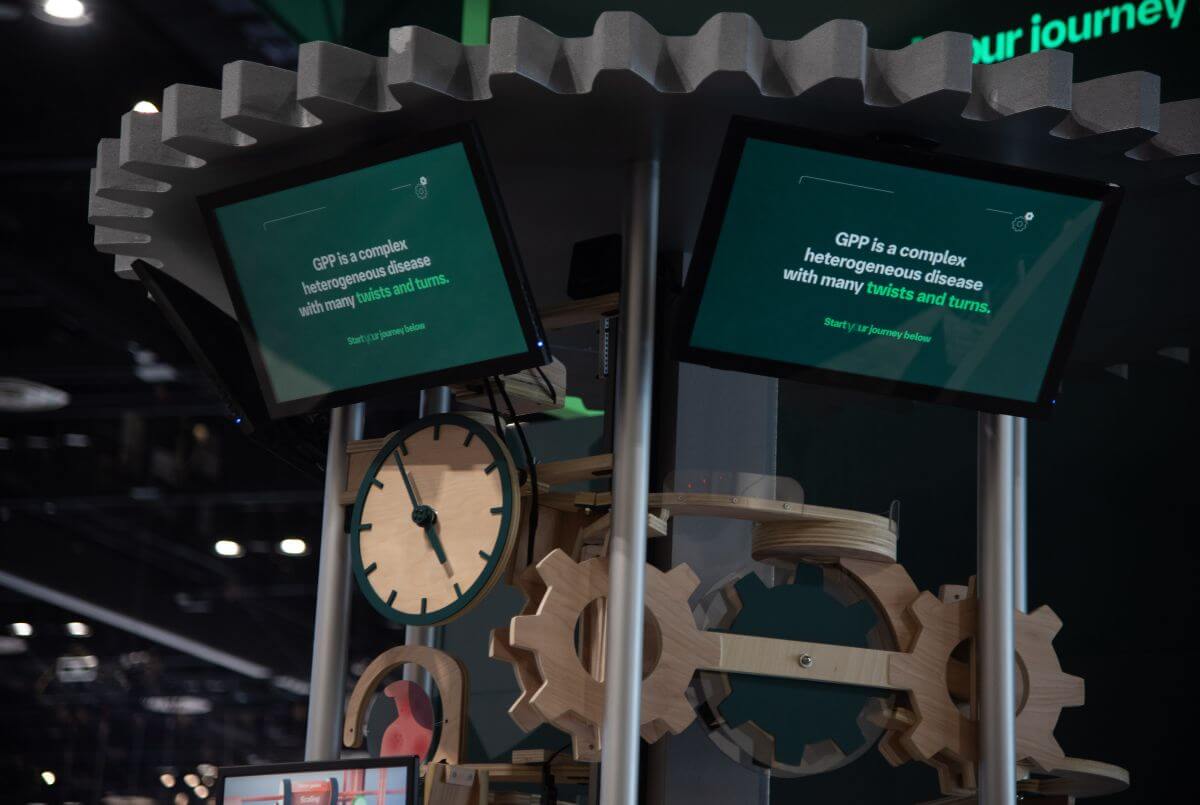
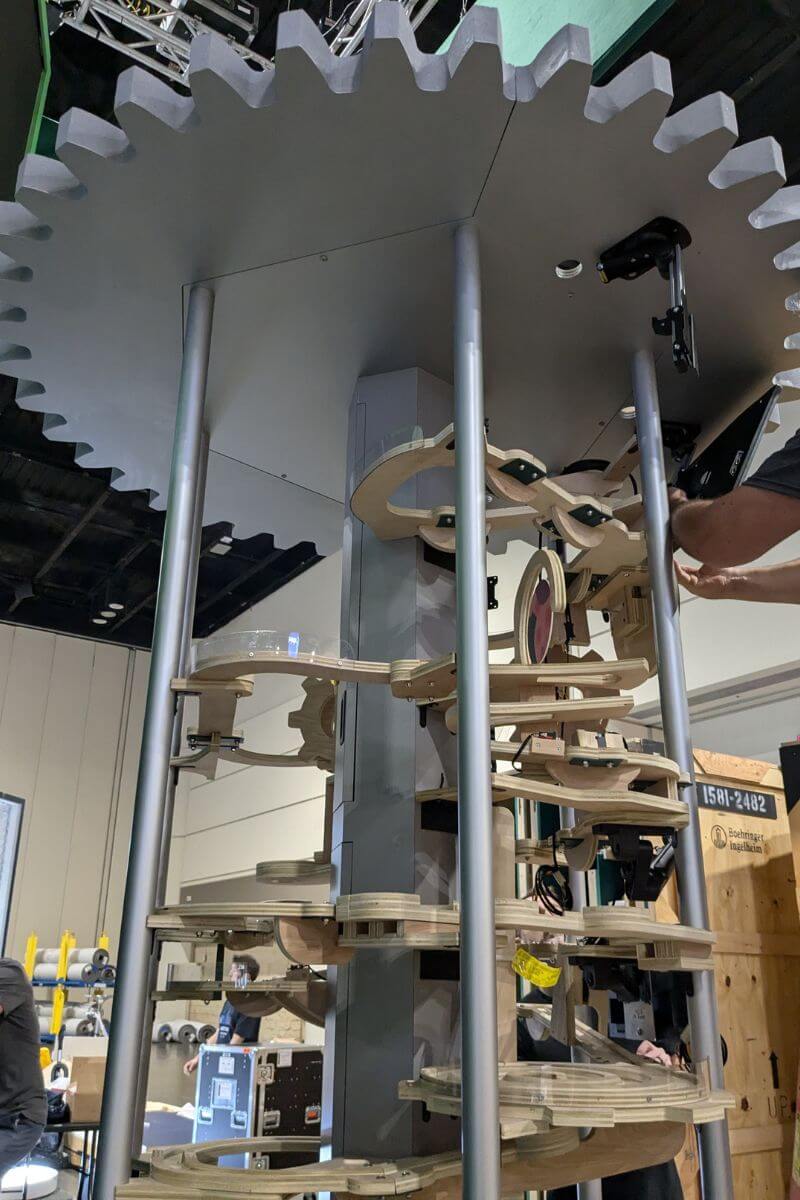
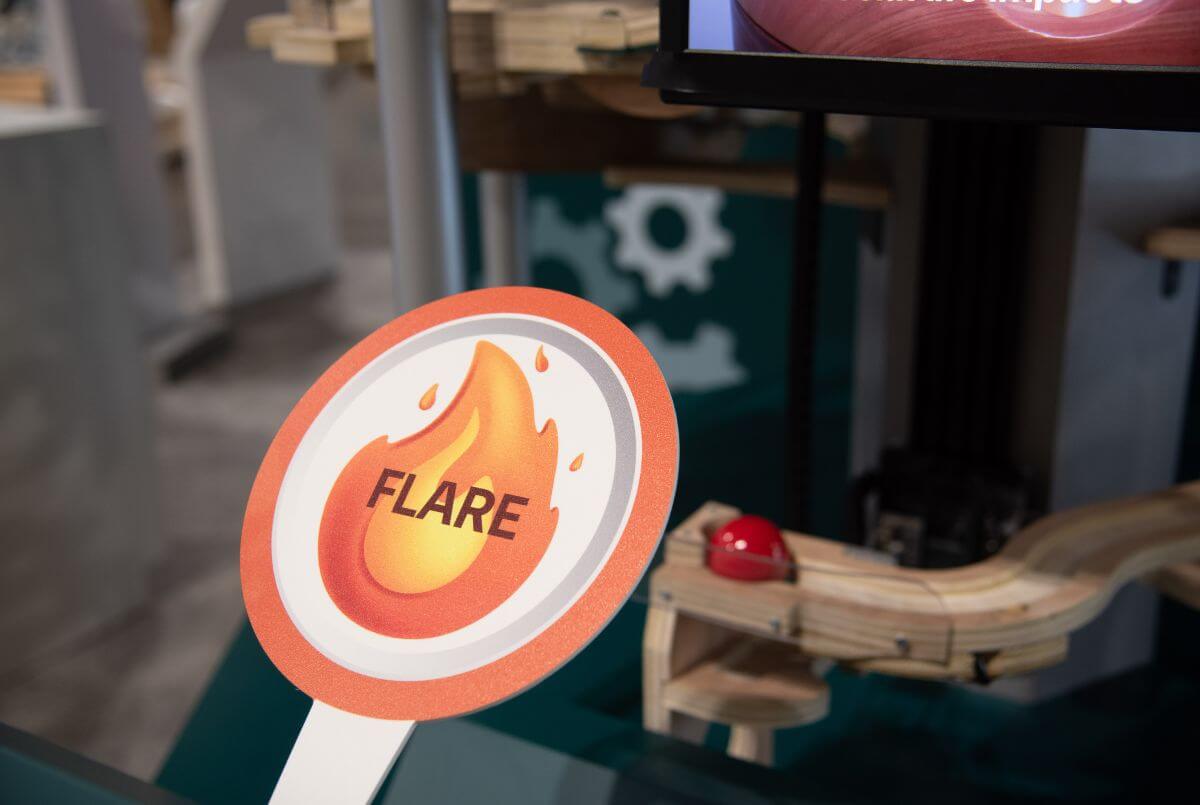
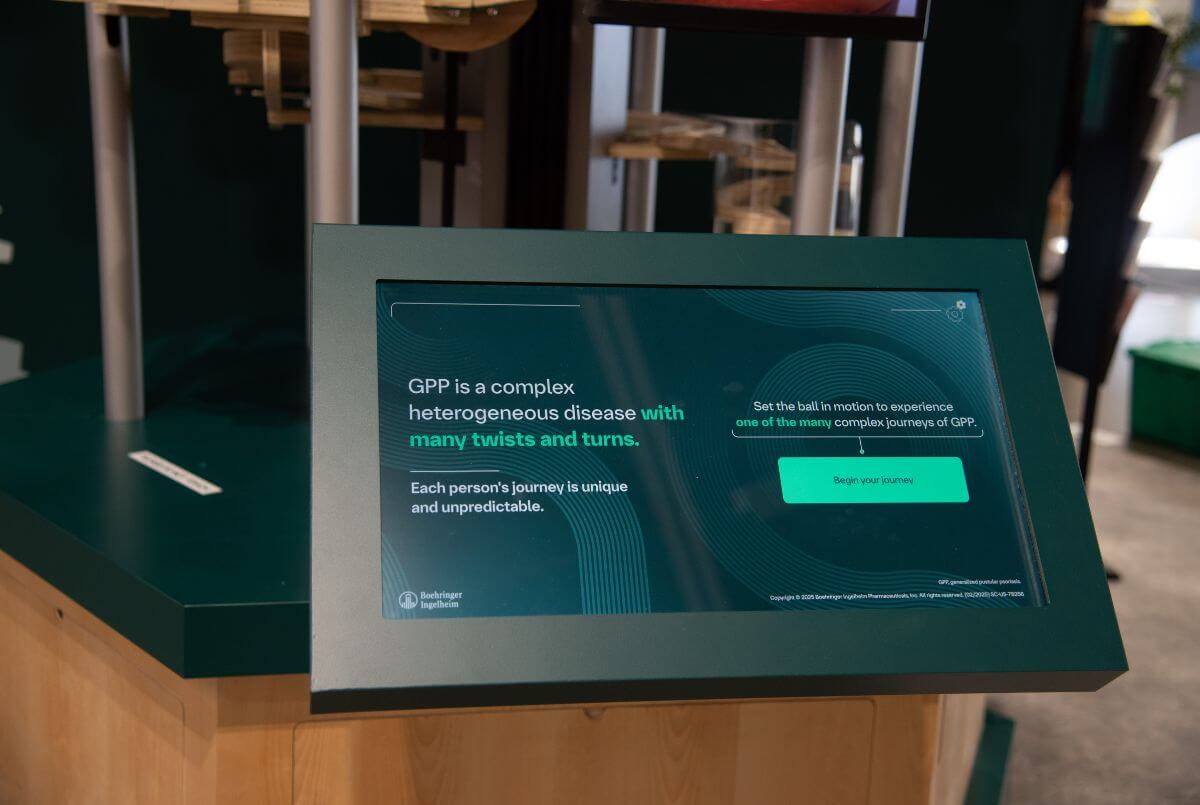
How did it work? A ball moves down a path, and as it moves in and out of these paths, it passes behind screens, pausing in place while the screen delivers the information to the viewer, but also delivers an animated sequence that starts and stops the ball at the same time.
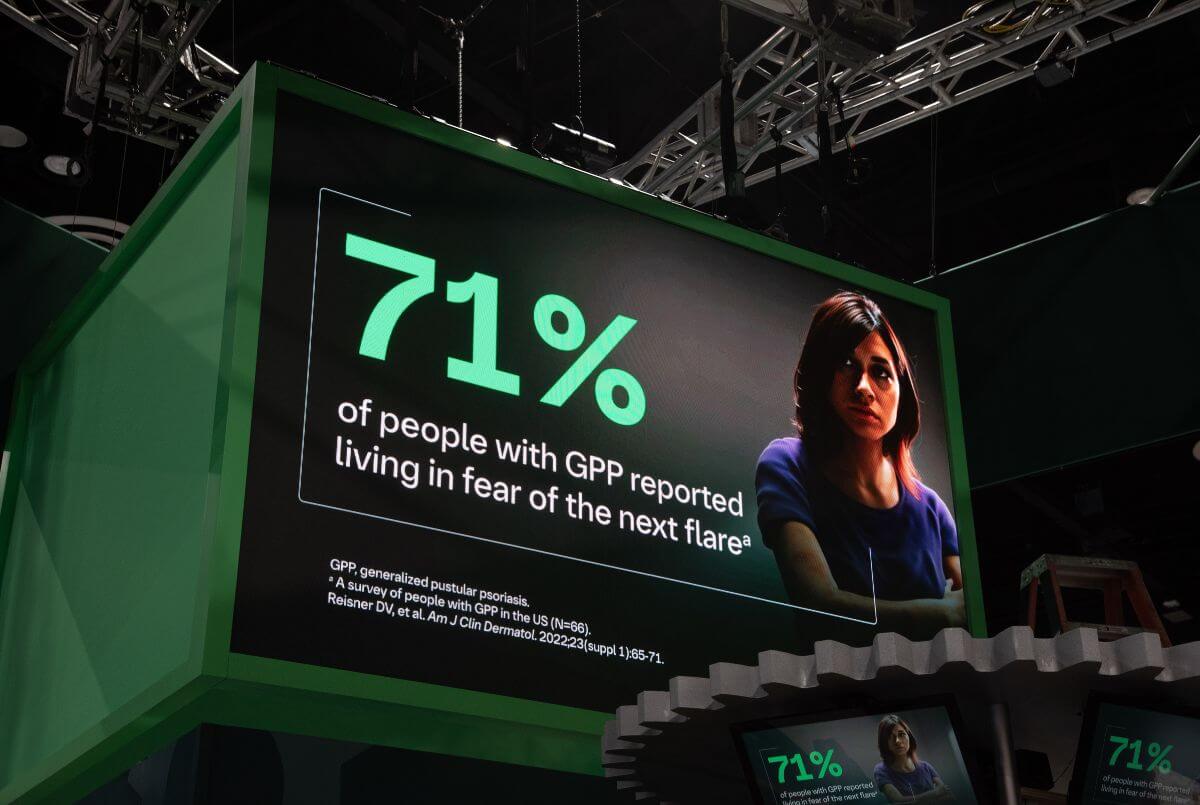
In other words, it’s a Rube Goldberg machine that’s directly tied to a digital animated sequence delivering the data points. The tricky part was building it so that all the physical mechanisms that start and stop the ball along the way were perfectly timed with the screens themselves.
Our project manager and our detailer did extensive research into everything from the substrates to the angle of the slope, which, for some of the tracks, dictates how fast the ball moves and sets the time between one screen and the next to queue up the next set of data points. A lot of testing went into this project.

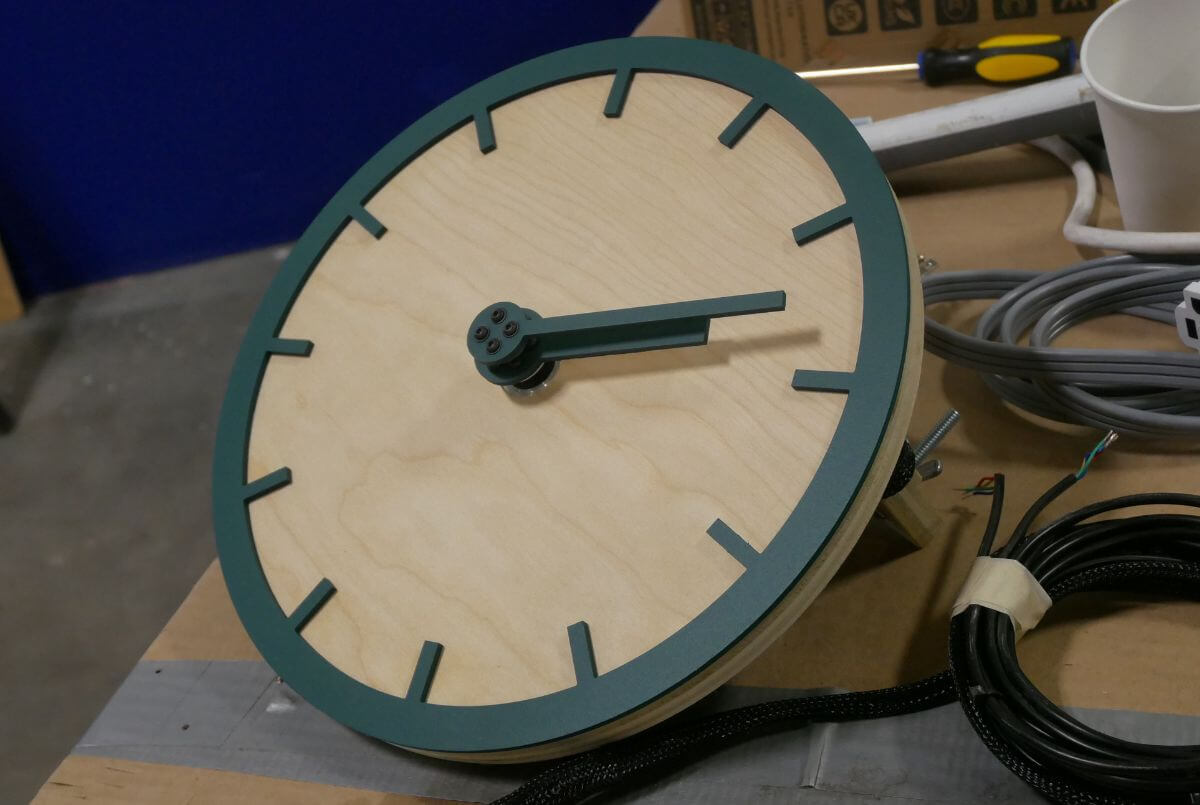
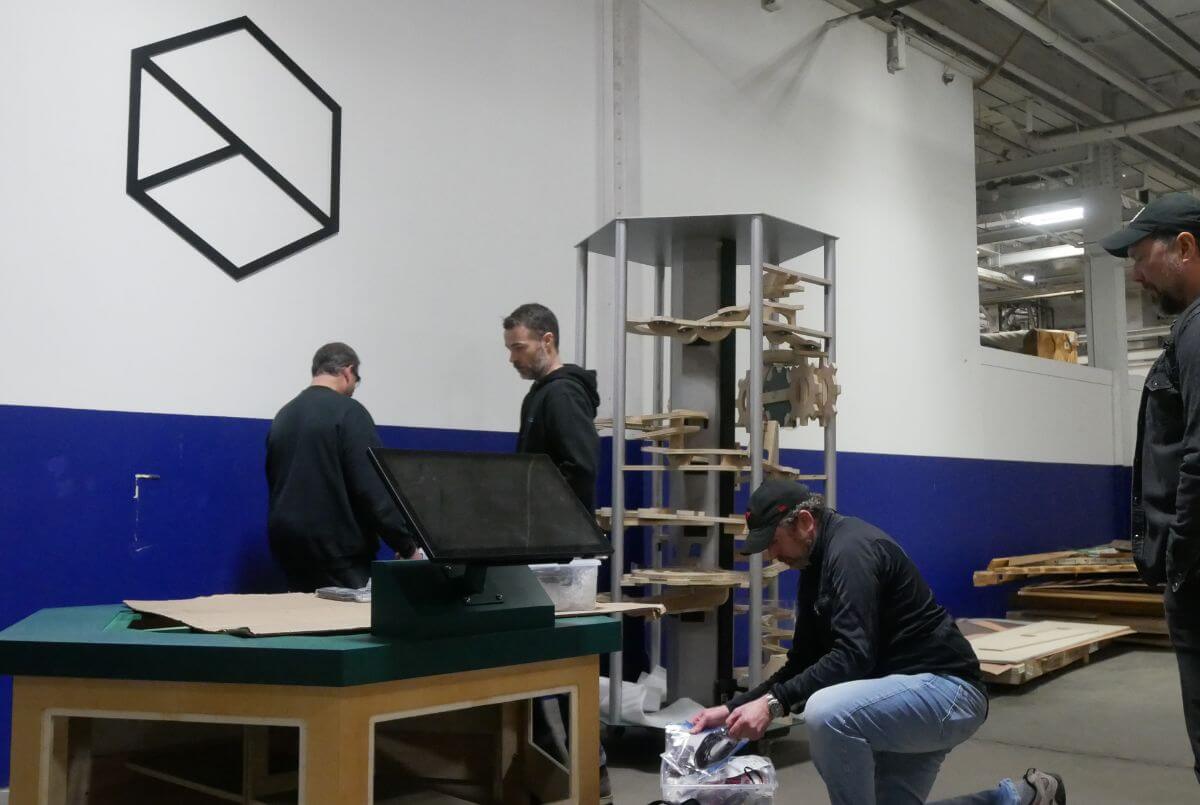
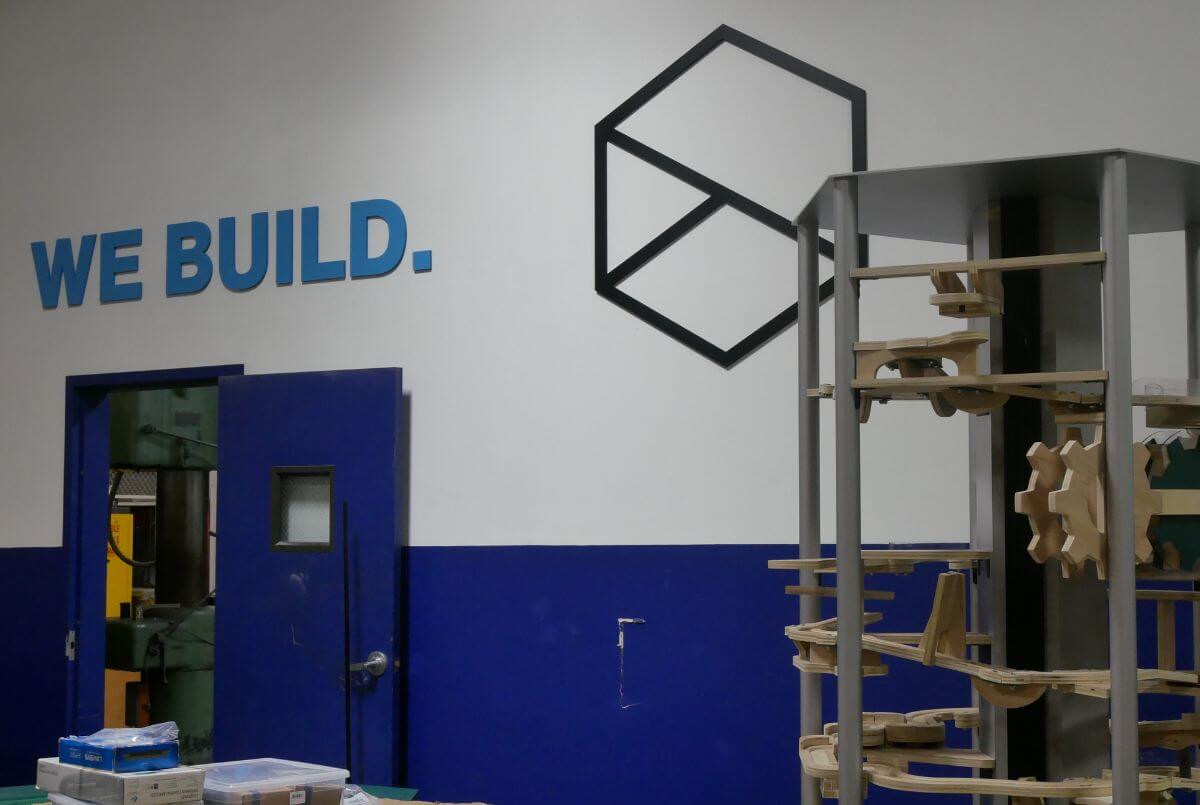
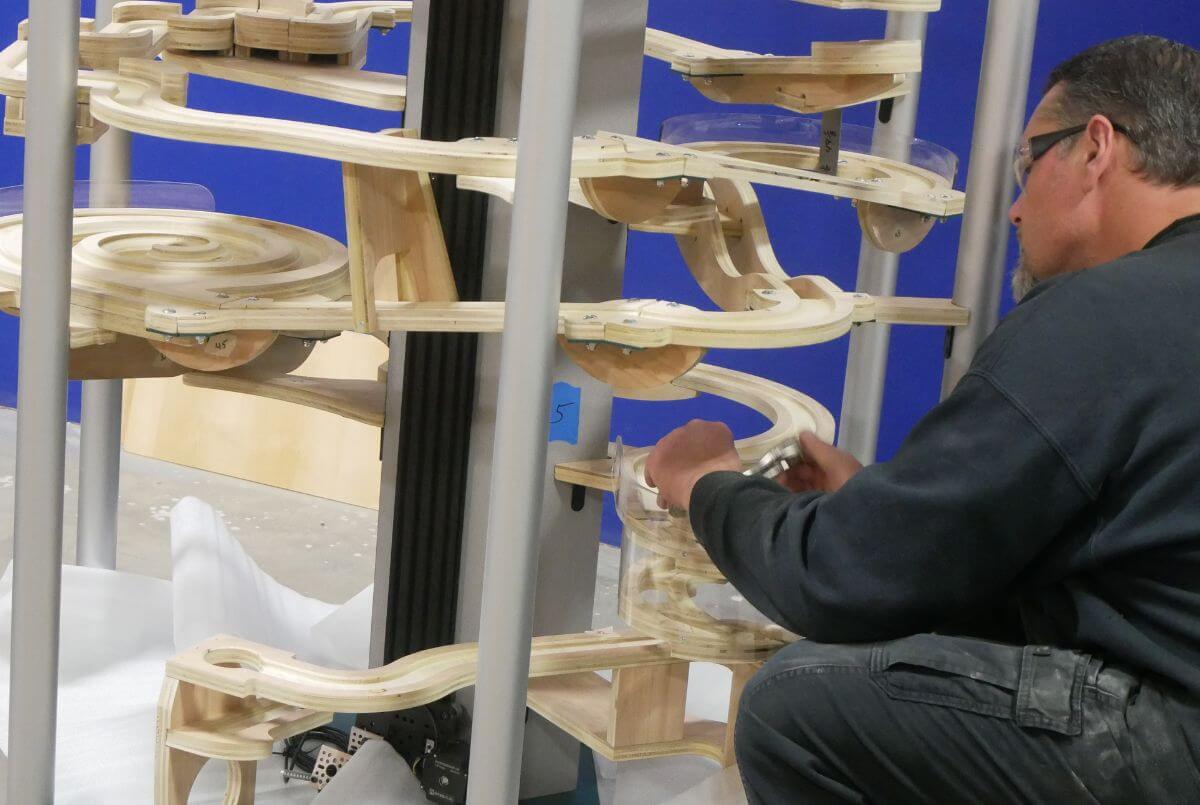
Detailing all the individual pieces and cutting all the wood pieces with our CNC machine.
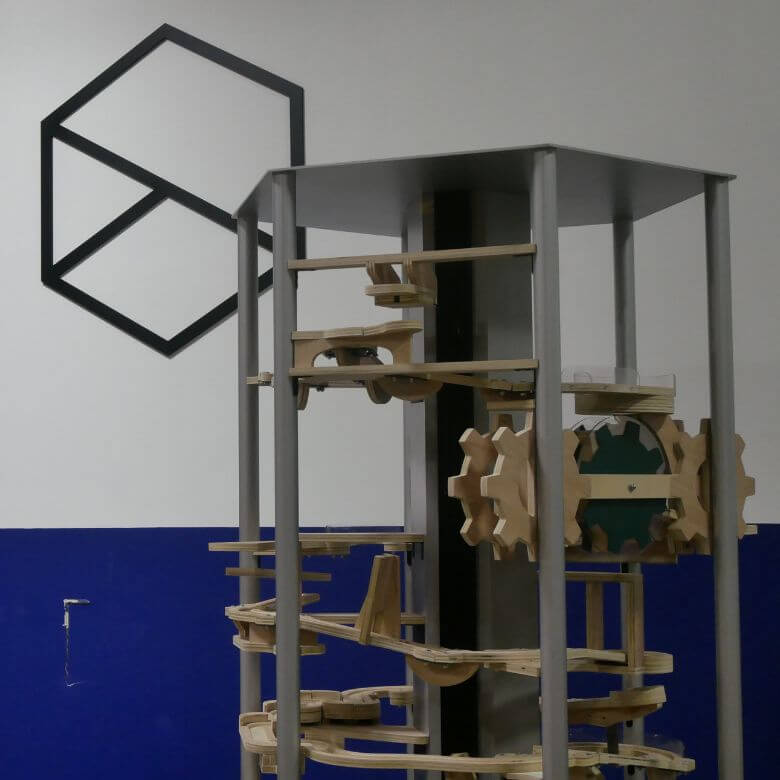
Our metal shop built a lot of the framework and piping.
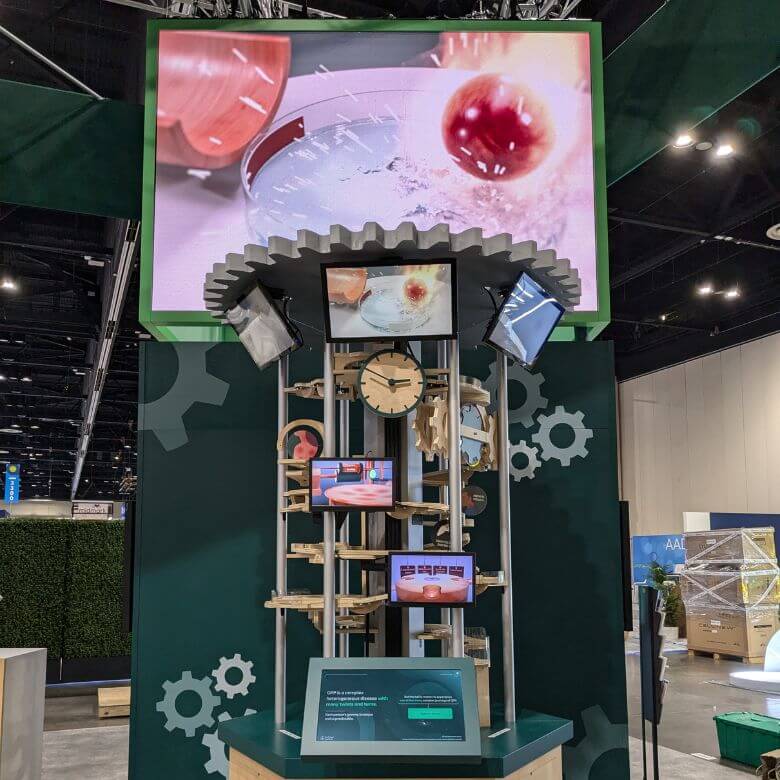
Nucleus came in and timed all the animated sequences in sync with the physical ball moving down the pathway.

More than anything else, this project is a testament to the production side of the house—the ability to take a concept and literally bring it to life—and demonstrates Access’s capability to take a concept to completion, even when it’s for something as wild as this.
The global group in Germany was so impressed with our machine that its next stop will be at EADV, the European equivalent of AAD.
Event Highlights