Boehringer-Ingelheim’s disease state exhibit explored the patient experience.
Boehringer Ingelheim (BI) one of the world’s largest pharmaceutical companies, and the largest private one, has a drug in their pipeline to treat Generalized Pustular Psoriasis (GPP).
However, the drug is not yet FDA-approved for use in the US. To familiarize dermatologists at the 2022 American Academy of Dermatology (AAD) with this pernicious auto-immune disease, BI decided on what is known as a disease state booth—one that educates healthcare professionals (HCPs) on a specific therapeutic area. In this case, in addition to the science, the exhibit educated the healthcare professionals on the patient experience. Working in partnership with agency Area 23, the result was stunning.
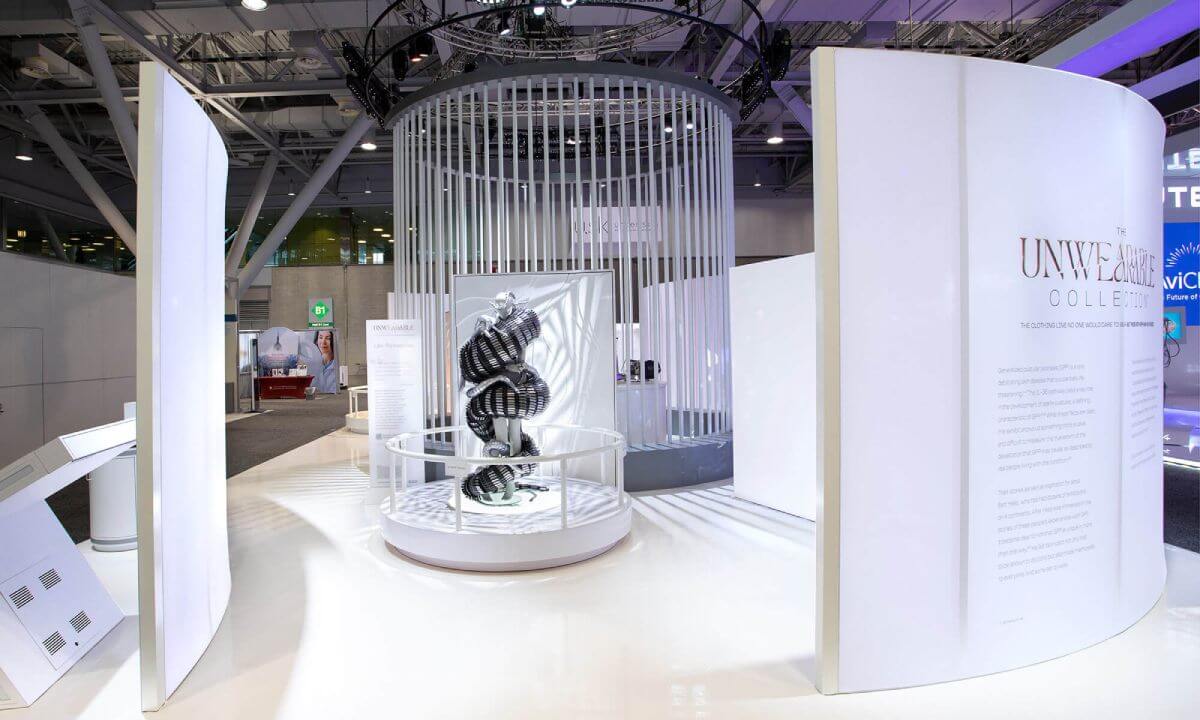
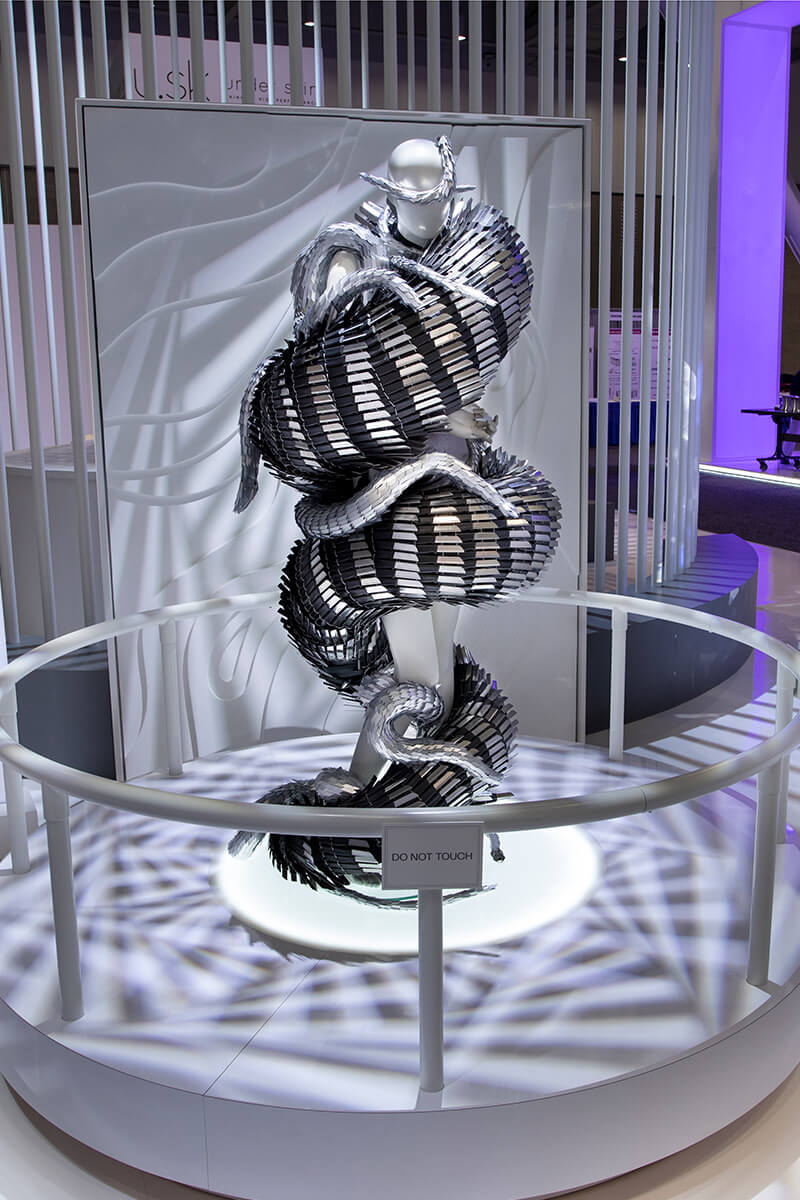
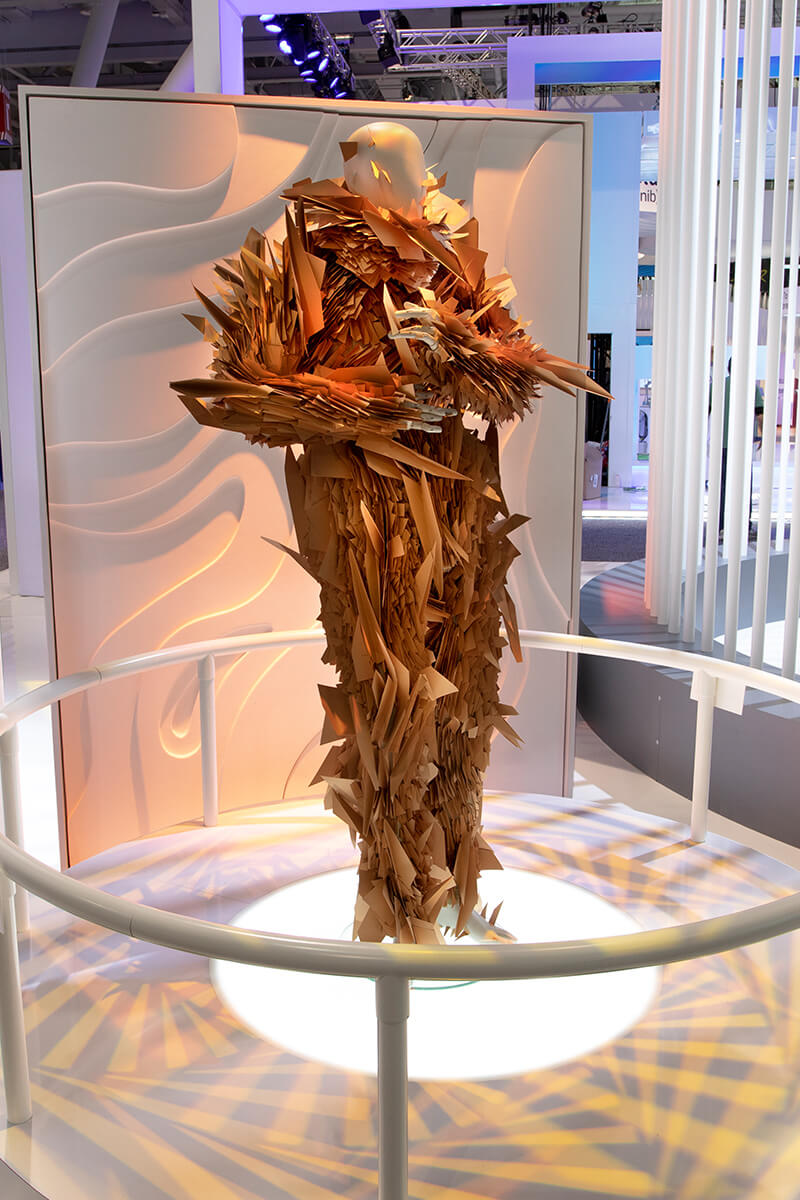
BI used a collection of four sculptures by Bart Hess, each a 3D interpretation of how people with GPP described their experiences and symptoms. The sculptures evoke a high-end fashion show presentation, so the entire exhibit is themed, The Unwearable Collection.
Award-Winning Exhibition


The Unwearable Collection
The Unwearable Collection represents the feelings and emotions of patients suffering from GPP. These feelings are translated into the models or sculptures.
Physical Pain
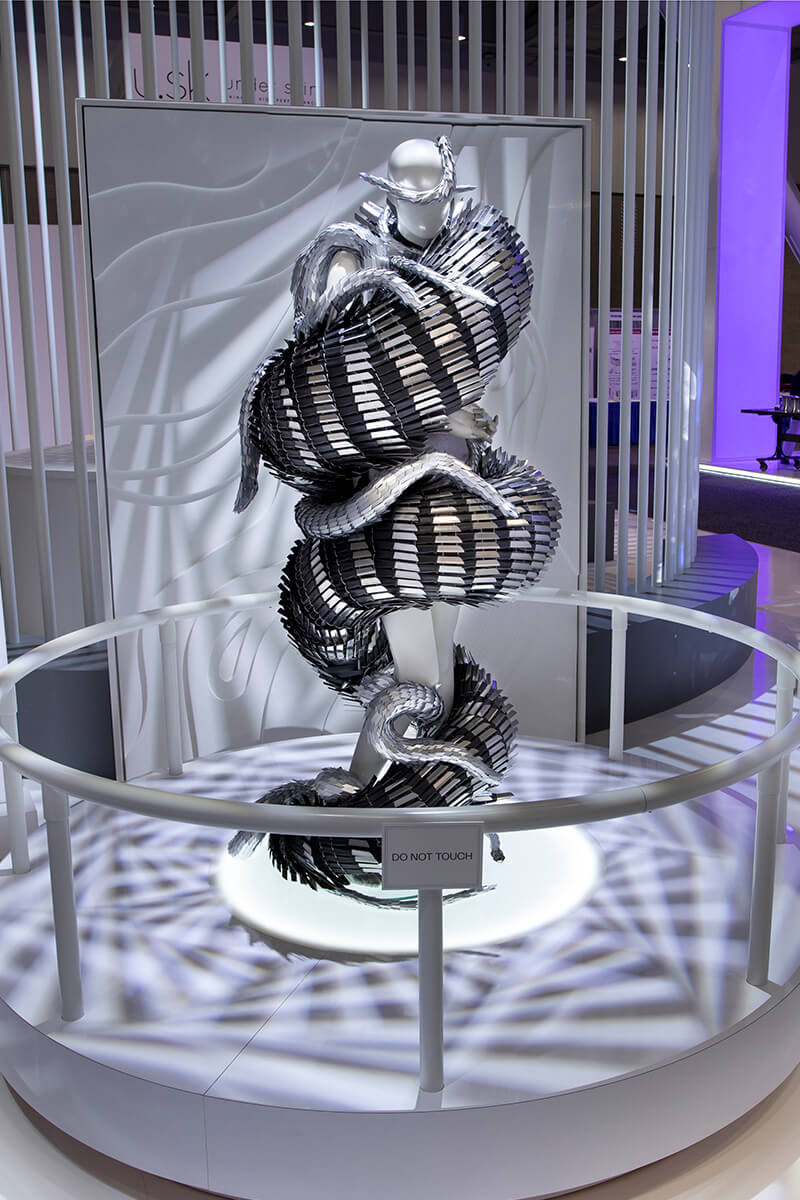
Life-threatening/2900 Knives

The Pain of Isolation

Flare Intensity
Each of the four sculptures is mounted on a pedestal, and the back wall of each pedestal has a cut wave so that lighting can diffuse the color of the sculpture on the floors and walls. Each pedestal is made of laminated plywood, with LED lighting in the center of the floor.

The entire exhibit is washed in stunning
theatrical lighting.

The center features a registration area as well as a catering station, and is set off by vertical painted aluminum bars, 12-14 ft high, treated with sheer fabric.

The hanging sign showcases four (4) BI 3-D backlit cam letter logos. The structure is made of black painted metal with milk Plexiglas.
Explore the Exhibit
The Unwearable Collection evoked an empathetic response from the attendees, who began to understand the pain of those afflicted with GPP.