

In part one of our Advocacy Through Access series, we explored how some forward-thinking healthcare exhibitors are updating and modernizing their exhibits to better attract, retain, and engage hard-to-reach clinicians. By reducing the number of overhead product logos, the copy-heavy graphic panels flanking each wall, and the detail counters guarding the carpet line, these exhibits seem more modern and purposeful. Their streamlined appearance stands out from the blue-and-white sea of sameness of today’s congress floor. Designers are left with space to communicate each company’s values imaginatively, asserting commitment and leadership without using vague taglines or bland mission statements. Visitors are drawn to European-grade hospitality areas stocked with innovative refreshments* and flanked by comfortable seating. Meeting spaces are ubiquitous and flexible in size and degree of privacy, each with a touchscreen ready to serve up the latest visual aid or branded MOA. While it takes a while for the sales staff to acclimate to this new, somewhat unstructured environment – the engagement equivalent of casual Friday – interactions eventually feel fluid, less forced, and more purposeful.
Recognizing the Increasing Value of MSLs
Although early adopters have focused on reinventing their commercial areas, implementing a variation of “Engagement First” in the medical area could yield even better results by capitalizing on another major trend. Pre-pandemic, medical congresses were hailed as a cost-effective and efficient way to reach doctors. However, the landscape has drastically changed. The downsizing of field forces and the fatigue from Zoom meetings have made it increasingly difficult to connect with physicians. In this challenging environment, one group has managed to break through. MSLs were introduced in the late 1960s to build rapport with opinion leaders. Today, the need is greater than ever, and the role of MSLs is experiencing a resurgence. Dr. Samuel Dyer, CEO of the Medical Science Liaison Society, cites a study conducted by that group showing when communicating with HCPs, MSLs average 45 minutes per engagement compared to fewer than two minutes by the average sales rep. Likewise, clinicians are more likely to see MSLs as peers and, thus, more credible. In one 2021 study by the MSL Society. 76% of HCPs ranked discussions with MSLs as more valuable or much more valuable than discussions with sales representatives. With MSLs playing a key role in moving clinicians along the continuum of awareness to advocacy, it makes sense to deploy them to conventions and equip them well for success.
Setting up the Medical Team for Success
While exhibitors at oncology meetings long ago recognized the opportunity of a well-equipped medical area (presumably due to considerable off-label use of approved drugs), most of today’s medical areas consist of a small desk flanked by minimal messaging. In some extreme cases, cost-cutting has left medical teams working out of the equivalent of three-sided phone booths. More square footage, streamlined design, more compelling content, and fresh internal consensus on the boundaries of engagement are setting medical teams up for success:
- More stopping power. Clean and clinical is safe but doesn’t draw physicians. Today’s exhibitors are more likely to see merit in “branding the science,” refreshing their medical areas with creativity and sophistication to attract more happenstance visits by HCPs—another common practice in oncology.
- More exhibit traffic. The lure of creature comforts and access to clinical information can result in considerable foot traffic without violating the traditional standard of passive engagement. Medical staff is allowed only to respond to inquiries.
- More substantive engagement with HCPs. Once a visitor has crossed the carpet threshold, easy access to rich sources of clinical data fuels what are often organic, substantive, free-flowing peer-to-peer conversations. The emphasis stays on learning and information exchange vs giveaways and narrow sales messages.
- More flexibility for MSLs. Having a wealth of clinical data, information about clinical trials, and other information on hand encourages exploration and, thus, fuels engagement. It’s a flywheel– encouraging direct inquiries that MSLs can respond to without running afoul of the rules.
- More credibility for the exhibitor. With relatively few companies adopting this approach, those who do differentiate themselves as respectful, credible, and reliable sources of current and future therapies that offer real patient benefit.
- Better results. Likewise, with relatively few exhibitors on the bandwagon, those who embrace the model stand to capture a disproportionate share of the limited time HCPs have to spend on the show floor. A new generation of monitoring systems, identical to those deployed in the commercial area and across multiple meetings, can generate a sophisticated, holistic view of the event’s success and room for improvement.
What’s Next?
No matter how inspired the exhibit design and educational assets are, substantive engagement (and thus good results) depends on a proactive, knowledgeable staff. In our next installment, we will look at the origins and impact of staffing shortages—some more apparent than others—and how some exhibitors are closing that gap. Later this fall, we’ll examine how these trends—fueled in part by a rich supply of new materials and new technology options—create exciting new opportunities for marketers, fresh challenges for designers, and headaches for risk-averse compliance professionals. In the meantime, are you using your medical areas to build clinical advocacy, deepen relationships with clinicians, and gain a share of voice at healthcare conventions? Does the Engagement First model work?
* Want some examples of innovative refreshments? Check out some of our favorites below, courtesy of our partner, Crêpes à Latte:
Siphon Coffee
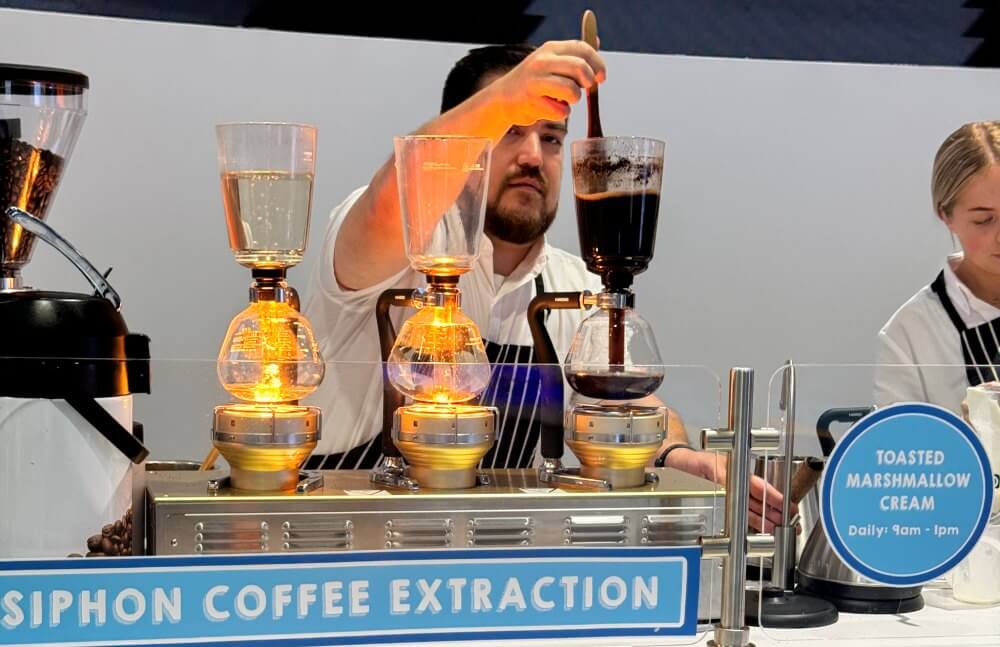
This specialty coffee features a visually stunning brewing method that uses vacuum filtration to push hot water through a bed of freshly ground coffee. Each handcrafted coffee is topped with a rich, flavored cold foam and warmed caramel stroopwafel.
Energized Organic Beverage Fusions
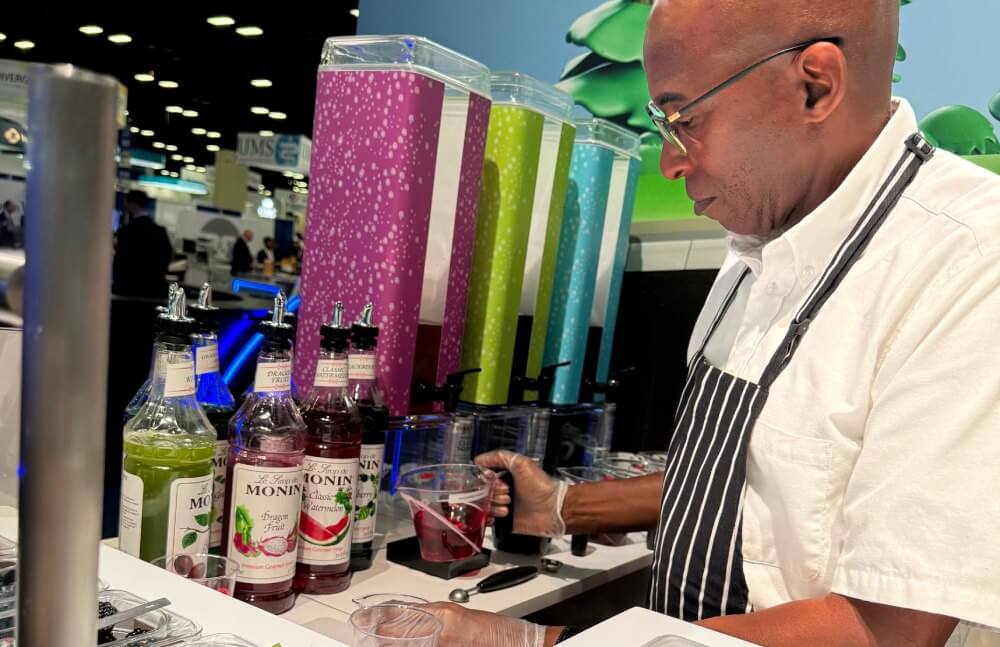
These vibrant beverages feature coffee fruit elevated with nature’s elite organic “adaptogenic” botanicals, superfruits, amino acids, B-vitamins and natural flavors. Attendees can choose from a menu of five beverages that include dragonfruit punch, granny smith’s melonberry fusion, kiwi apple fizz, pearadise city, and raspberry crush.
Wellness Fresh Juice Zingers
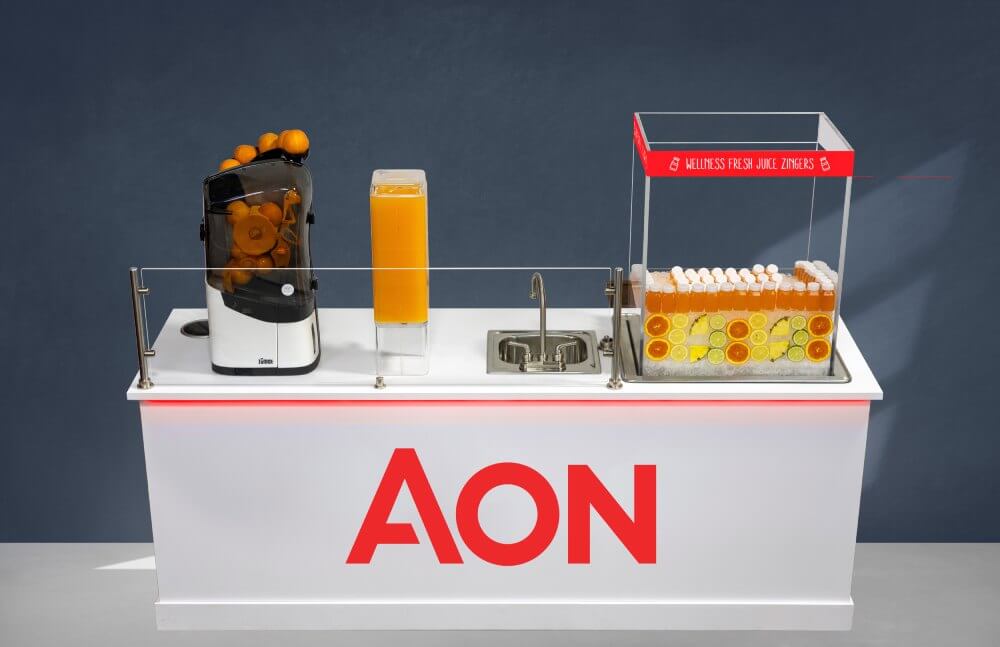
These freshly squeezed juices are nutrient-dense, packing a huge punch of vitamins and antioxidants for a refreshing and healthy twist on the show floor. One curated flavor blend for the morning and a second for the afternoon to bring attendees back to your booth for a second wellness boost.